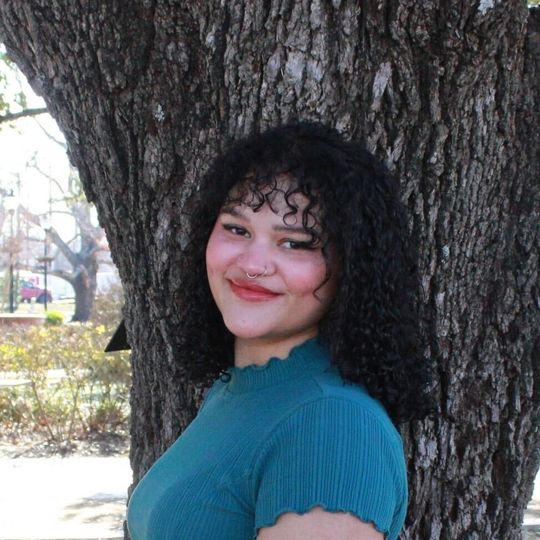
 Brittany Kelley

KYLE — Kyle City Council approved an interlocal agreement (ILA) with Hays County and the city of Buda at its Jan. 20 meeting, following a tabling in December.
The item, which has been in the works since the San Marcos Regional Animal Shelter announced that it will not be renewing its contracts with the cities come October 2026, was tabled at the Dec. 15 meeting to allow the newly elected council members time to view and form opinions on the document.
“After hearing that [information] in early 2025, we started a feasibility study that included a needs assessment, a data analysis, extensive public stakeholder input, site evaluation, programming, financials and right sizing of that facility,” said assistant city manager Jesse Elizondo. “We expect the full design to be done in 2026, probably late 2026, at this point, and then, have full construction in 2026/2027.”
According to agenda documents, the ILA states that the city of Kyle will retain full ownership and operational control of the facility, while contributing 32.7% of the cost. Hays County will be responsible for 64.5% and Buda 2.8%. Additionally, an Animal Care Advisory Board will be created to make nonbinding recommendations.
Elizondo shared that the service area will not include the western portion of the county, but that the facility will aim to work with local nonprofits, such as Prevent A Litter (PALS). This effort has been added to the ILA, as it now emphasizes that the municipalities are “committed to maximizing positive life-saving outcomes for animals and will continually align policies, partnerships and operations toward that goal.”
Beginning the discussion was council member Courtney Goza, who was concerned about possibly taking in animals from Wimberley and other locations not designated within the discussed service areas.
Hays County Commissioner Walt Smith was in attendance and explained that the county had previously considered a full service facility, but was quoted approximately $30 million, which would have burdened the taxpayers. The real need was within the Kyle region, which this ILA agreement covers. Then, in the future, the county can look into creating satellite locations in Wimberley and Dripping Springs with the same services. Because of this, the intent of the ILA is to not bring in animals from cities outside of the predetermined service area.
“Looking at the ILA, the city of Kyle is agreeing to take on a tremendous amount of responsibility — sheltering services, disease prevention, animal holds, quarantining animals … That’s a concern to me,” said Mayor Yvonne Flores-Cale, adding that she is also concerned about the termination process for the agreement.
Elizondo explained that it’s a safeguard for the city of Buda and Hays County by stating that if Kyle terminates the agreement and kicks everyone out of the facility, that the city will pay them back. This safeguard also works the same way for the city, he said.
The mayor continued to share additional concerns, including that there are no explicit numbers listed in the ILA, only percentages. So, she questioned what certificate of obligation bonds were approved for the facility. When told that the $10 million in the capital improvements plan is not yet issued, she suggested adding language in the agreement that limits the city to $10 million.
“We have estimates for the cost of the building — it’s a range right now — [and] until that’s refined, we don’t have an exact number, but we expect the total cost to be less than $10 million,” said city manager Bryan Langley.
“I don’t want to just give a blank check. Right now, we already have to pay $1.6 million just to get these [design plans] and then, what if we do the $1.6 [million] and realize that it’s going to cost everybody $15 million instead,” stressed Flores-Cale.
Additionally, she questioned the price of annual maintenance, to which Elizondo stated it would be $4-$8 million to be split between the partners. So, Kyle would pay approximately $650,000 to $1.5 million per year.
“My opinion is I think the city of Kyle should do this on their own. I think we can stay within the $10 million. We can focus on our residents and our animals. My hope would be that we could make it a no-kill shelter. I think we could do more because, essentially, [the need] is a county issue. If the county doesn’t want to take control over it and if the county doesn’t want to participate and be the one in charge of this, I figure then it should just be the city of Kyle,” emphasized the mayor.
Council member Marc McKinney was opposed to this idea, as he stated that, in an ideal world, an animal services facility wouldn’t be needed, “but in the absence of an ideal world, we need to do the best we can do … This is an opportunity, where we can partner and maximize the tax money that our residents are paying to get the most amount of good, to get a significantly better facility.”
Ultimately, the item passed 6-1, with Flores-Cale dissenting.
Council also discussed the $1.6 million design contract with Jackson & Ryan Architects, Inc, as previously mentioned by Flores-Cale.
“The next major milestone, which is very exciting, is a full design phase for this building. It converts the feasibility study into full architectural, civil, structural, mechanical and site development documents required to prepare the project for full construction in [20]26-27,” said Elizondo.
Representative Kim Hansen then gave a presentation to council members: “Our goal here is to provide you a building that is going to last for decades. Not a facility that, as soon as you open it, becomes obsolete or tumbles or falls apart, which we see frequently in the animal welfare industry. These facilities take a beating … and so, during this process, we’ll be integrating increased detail development, as well as coordination with our engineers and the city-led civil team.”
The estimated timeline breakdown is as follows:
• Three to four weeks for program confirmation
• One to two months for schematic design
• Three months for design development
• Four months for construction documents
• Two to four months for the permit and bidding process
Regarding the costs, she explained that, because of the now approved ILA, the city of Kyle will be contributing $542,820 out of the $1.6 million for the design contract.
According to city attorney Aimee Alcorn-Reed, Kyle will begin payments for the $1.6 million, after the county and Buda show proof that they have money set aside for their portions — $1,070,700 and $46,480, respectively — and then, as it gets paid down, the other municipalities will pay their contributions.
The design contract was approved 6-1, with the mayor dissenting.
To listen to the discussions, visit bit.ly/49yo2wa. Kyle City Council will next meet Feb. 3.