 Lance Winter
DRIPPING SPRINGS — Music will take center stage Saturday, Sept. 12, in Dripping Springs, but the evening's purpose reaches back more than 170 years.
With the help of the community, the benefit concert, located at Dripping Springs Ranch Park (DSRP), will be the largest fundraiser undertaken by the Friends of the Pound House Foundation to date.
For Jeanne Polk, president of the Friends of the Pound House Foundation, the event is about more than filling seats for an evening of music. It is part of an effort to sustain The Poundhouse Farmstead, a historic property that has faced years of disruption, restoration work and the continuing expense of preserving structures and artifacts dating to the community's earliest days.
She noted that the foundation began facing financial challenges after the COVID-19 pandemic halted many of the activities that helped keep the Pound House connected to the community.
Additionally, prior to the pandemic, the site hosted school field trips, galas and other activities. Then, a leak was discovered in the historic house, Polk said, leading to mold and restoration work and effectively keeping the house closed for about three years. The closure came at a particularly difficult time, she said, since programs and visitors disappeared, but the bills did not.
Now, the organization is working to rebuild its public presence. Polk said that the Pound House is preparing for its first school field trip since before the pandemic, an important milestone because school visits introduce not only children, but also their parents, to the property.
The concert is another part of that effort and will feature Desert Highway and The Kyle Sisters.
Desert Highway is an Eagles tribute band and has developed a following for its performances of Eagles’ music. Polk said the band is "extremely talented” and does more than reproduce the songs; its members also tell some of the story of the Eagles during their performances.
The Kyle Sisters bring another local connection to the event. Polk described the group as a longtime Dripping Springs favorite with its own following.
Although held at DSRP, it will be inside. Organizers had originally envisioned an arena concert, but shifted the event indoors, a move Polk said should create a more intimate atmosphere, while protecting concertgoers from the September heat.
The indoor venue also means seating is limited. Polk said about 500 general admission seats can be accommodated after accounting for sponsor seating.
Proceeds will go into the foundation's general fund, helping cover operating expenses, as well as supporting the continuing work necessary to maintain the historic property.
Historic preservation often requires specialized restoration rather than ordinary repairs, Polk said. One project on the foundation's list involves a historic wagon whose wheels are in serious need of replacement.
"We fix it or we lose it," she said.
A link to the 1850s
The story the foundation is working to preserve begins in the 1850s with Dr. Joseph Pound and Sarah Pound.
The couple married in 1853 and arrived in the area the following year. Joseph was from Kentucky, while Sarah was from Mississippi. After initially going farther west, they returned and acquired a 700-acre tract in what would become Dripping Springs.
They were joined in the area by Sarah's sister, Indiana, and her husband. The Pounds, Mosses and Wallaces are considered the three founding families of Dripping Springs, Polk said.
Of those early family farmsteads, the Pound property is the one that remains.
Today, the Pound House Farmstead encompasses 4.97 acres of the original 700-acre tract.
"This is literally where people can come in and see 1850s history … where they can touch it," Polk said.
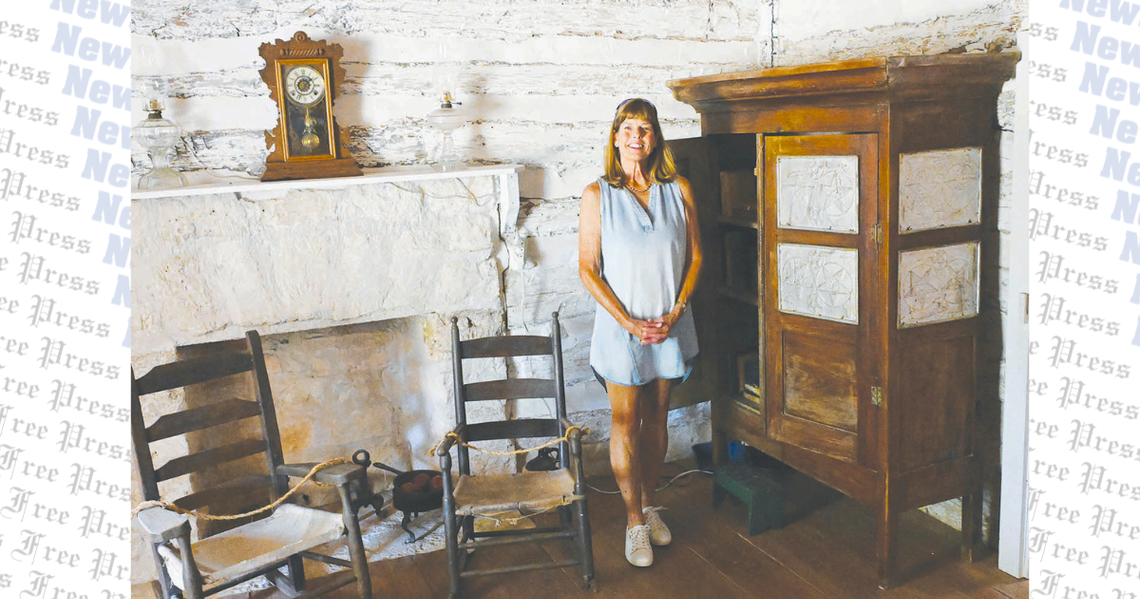
At the heart of the property is a log room dating to 1854. The farmstead also includes its original smokehouse, a historic cistern and a centuries-old oak tree that stands as another living connection to the property's past.
Polk said the oak is estimated to be about 500 years old. Preserving it requires its own form of maintenance, as an arborist regularly treats and fertilizes the tree and monitors its health, particularly because oak wilt is present in the area.
Even the architecture of the house tells visitors something about how early Texas settlers adapted to their surroundings, the president added.
The house incorporates a dogtrot, or open breezeway, designed to capture moving air and provide relief from the heat. Polk said visitors from other parts of the country are often unfamiliar with the design, which was common in parts of the South.
"They're interested in just the fact that it's still here," Polk said. "It truly is quite magnificent."
The house changed over generations, as the family added and removed sections to meet its needs. A dining room and kitchen were eventually added, along with bedrooms and a parlor. However, the latter was more than another room in a family home.
Joseph was a doctor and the property served at various times as a place where he treated patients and as a gathering place for the growing community. Polk said religious services were held in the parlor for a time, as well, and the property also functioned as a hospital, schoolhouse and community meeting place, which is integral to the history of Dripping Springs.
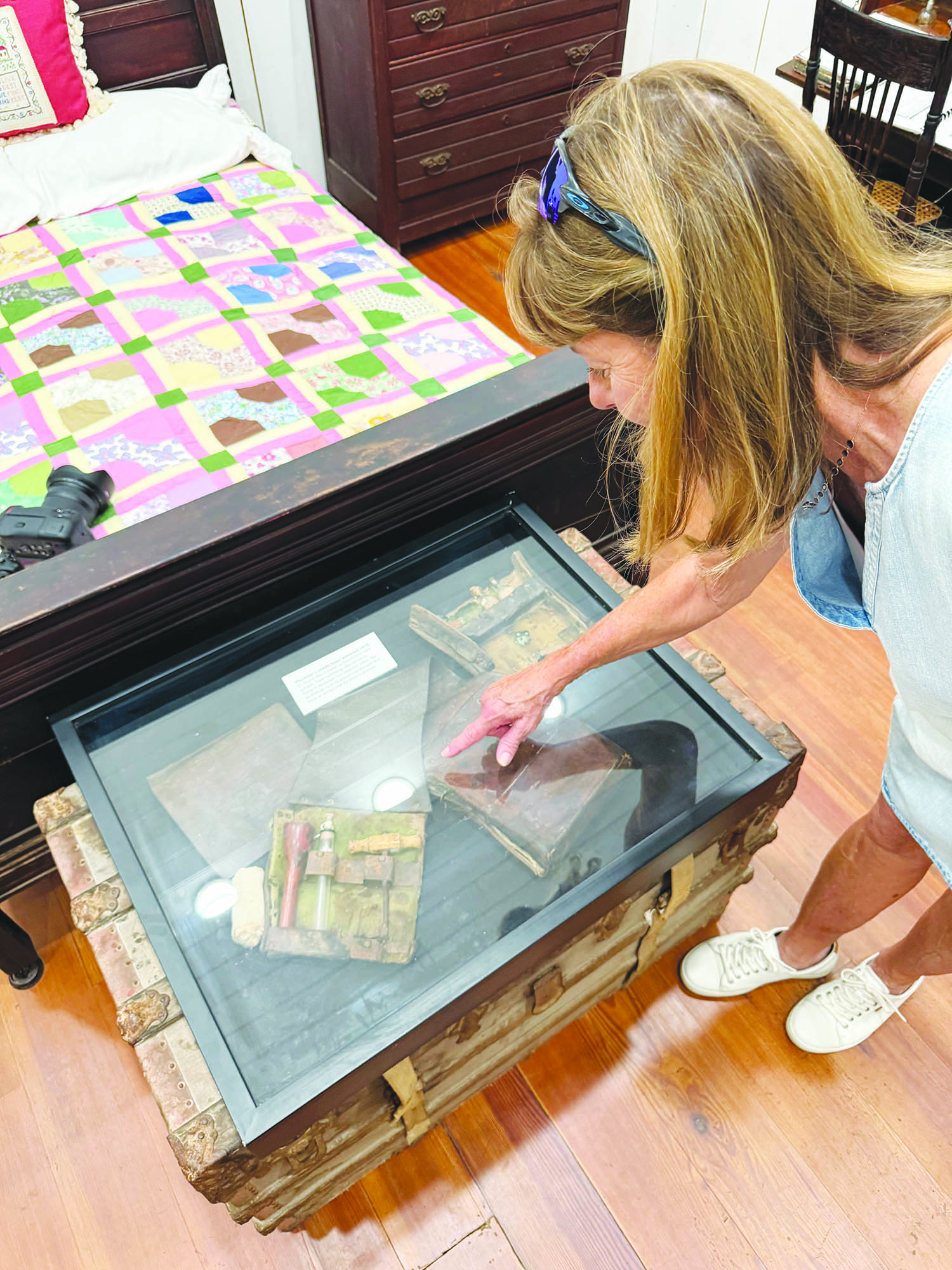
His work as a frontier doctor provides another window into life on the property. One of his surviving ledger books records the names of patients and shows that payment did not always come in cash. Polk said the doctor sometimes bartered for chickens and other goods. He grew medicinal herbs and mixed his own tinctures, carrying medicines in small glass bottles protected by partitions in his saddlebag as he traveled through the countryside treating patients.
His job demanded considerably more than medical knowledge.
"He had to be a farmer and a rancher," Polk said. "He had to be able to fix stuff."
The farmstead's cistern offers another example of that ingenuity.
Water collected from the roof passed through a charcoal box before entering the cistern, Polk said. The filtration system has been attributed to Joseph’s scientific and medical background. The cistern was positioned, so the family could reach the water from the house, and water remains visible at the bottom today.
Furthermore, she noted that life was quite different then, as meals were cooked over fire, family members shared rooms, baths were taken in tubs outside and every day items had to be made, repaired or reused.
For Polk, those experiences are an essential part of the farmstead's purpose.
"I want kids to know this is legit," she said. "This is your history."
A direct Pound descendant, Marguerite Cavett Hammack, granddaughter of Joseph, and her daughter Georgia lived in the house until 1983, Polk said. Although electricity had eventually arrived, the historic house still did not have running water. After the family left, however, the property deteriorated.
The land had been deeded to the city and, at one point, Polk said the house eventually reached a point where it was in danger of being lost. Dr. Dennis Cannon and his wife, Katherine Cannon, whose ranch was behind the property, became involved in efforts to save it and helped establish the organization that eventually became the Friends of the Pound House Foundation.
Although efforts have been made, rapid growth presents the Pound House with a different challenge.
The years when the property was closed coincided with an influx of new residents, meaning many people arrived in Dripping Springs without ever encountering the farmstead or learning the story behind it.
For Polk, bringing schoolchildren back may be one of the best ways to change that.
"It's so important to connect with history," she said. "They can come and see what it was actually like."
This requires more than money. Polk said the foundation also needs volunteers, particularly docents who can learn the history and share it with visitors. The organization offers docent training and other opportunities for people interested in helping at the farmstead.
Polk stated that she hopes the benefit concert will provide some of the money necessary to keep history intact because at the Pound House Farmstead, preservation is not simply about protecting an old house.
It is about making sure that, as Dripping Springs continues to grow, there remains a place where people can walk through a breezeway, stand beneath a centuries-old oak, peer into a pioneer cistern and encounter something tangible from the community's beginning, she concluded.
The event begins at 7 p.m. Saturday, Sept. 12, at DSRP. Tickets are $25. For more information on the event or the Pound House, visit www.phfmuseum.org.