 Brittany Kelley
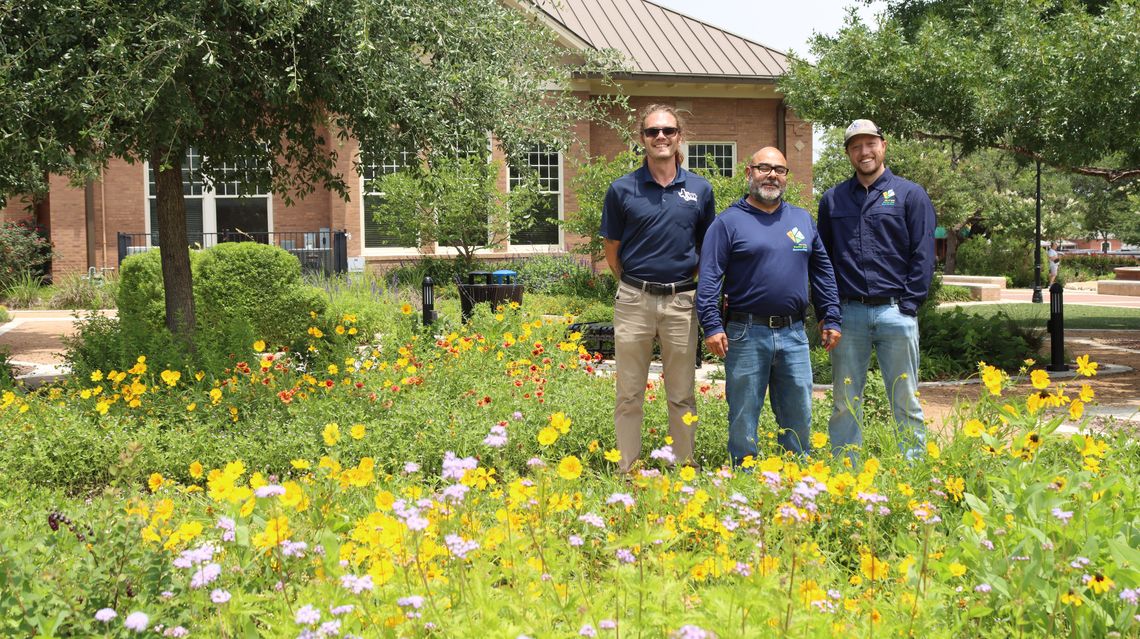
KYLE — Two years ago, the parks in the city of Kyle were suffering, but with the creation of the Conservation Division, nature is beginning to bloom once more, said Conservation Division manager John Davis and native landscape supervisor Calvin King.
Steeplechase Park, located in east Kyle, serves hundreds of residents daily, but what many may not know is that it’s actually lost 70% of its canopy, explained Davis. This was determined after a control portion of the same watershed, climate and plant species, located between Philomena Drive and IH-35, actually grew its canopy by 20%. The difference, prompted Davis, is human interference.
The manager went on to explain that he’s worked with parks departments across the state of Texas for 35 years and the standard is typically: mow it or don’t mow it. However, environmental care should never be this simple, stressed the pair.
The moment grass is mowed near a tree, the timeline of its life begins, said Davis. For example, if humans begin cutting around a tree, all of the seeds it's dropping are being mowed up, resulting in an interruption of the natural environment. Birds will not have seeds to pick up, fertilize and, ultimately, create a new tree. So, when the tree inevitably dies, there is not one sprouting next to it to replace it. This is what happened in Steeplechase Park.
Changing this mindset of “mow or not mow” is what Davis and King were striving to bring to Kyle when the division began in 2024.
“Many of our parks were actually dying. That’s the Steeplechase analysis,” said Davis. “The parks were suffering ecologically. They weren’t healthy and so, there was a need to make that change.”
One of these changes was creating an integrated pest management (IPM) position to address problems on the landscape with the lowest toxicity methods.
“A lot of times, you see in traditional Parks and Recreation departments people use the harshest chemical because they come [and] apply it once and they don’t have to come back. So, it’s efficient, but think about the fact that you’ve exposed the employees to a very harsh chemical [and] you’ve exposed the public to a very harsh chemical,” said King, adding that there are benefits to restoring order to the environment. “[If] you pick native plants, you realize the plants, the wildlife, the soil ecology [and] the microbes in there, they all mostly do the best they can to fight away pests and pathogens. Not saying you’ll never have to spray again, but you have to spray a lot less whenever you’re going with the native plant route and thinking with IPM.”
This idea is continued with Lake Kyle, as it is involved in a project partnership with the city of Kyle and Texas State University, due to its impaired water and high bacterial loads. The research will be using native plants to create floating wet beds. Native plants, said Davis, work with the local no-see-ums, or tiny biting insects, to break down pollutants and turn them into carbon and hydrogen local microbes in the soil the naturally fight away pests and pathogens.
Cleaner water is one of many ways that the ecosystems pay back the city, said Davis. He noted that all cities are under permitting programs from the Texas Commission on Environmental Quality, requiring minimum standards of clean water. If these are not met, the city is charged, said Davis. So, by bringing back native plants, the pollutant load in the watersheds are lowered, resulting in less violations by the city.
Furthermore, restoring these landscapes allows for 125% more water, due to native plants having extension root systems. As a result, more stormwater will be absorbed, meaning that the city has to spend less money on erosion control and deepening and widening of bridges because the water has a space to go, rather than flooding on top of the surface.
These are some example of ecosystem services, which are when the processes of a healthy ecosystem result in actual cost savings via less human intervention.
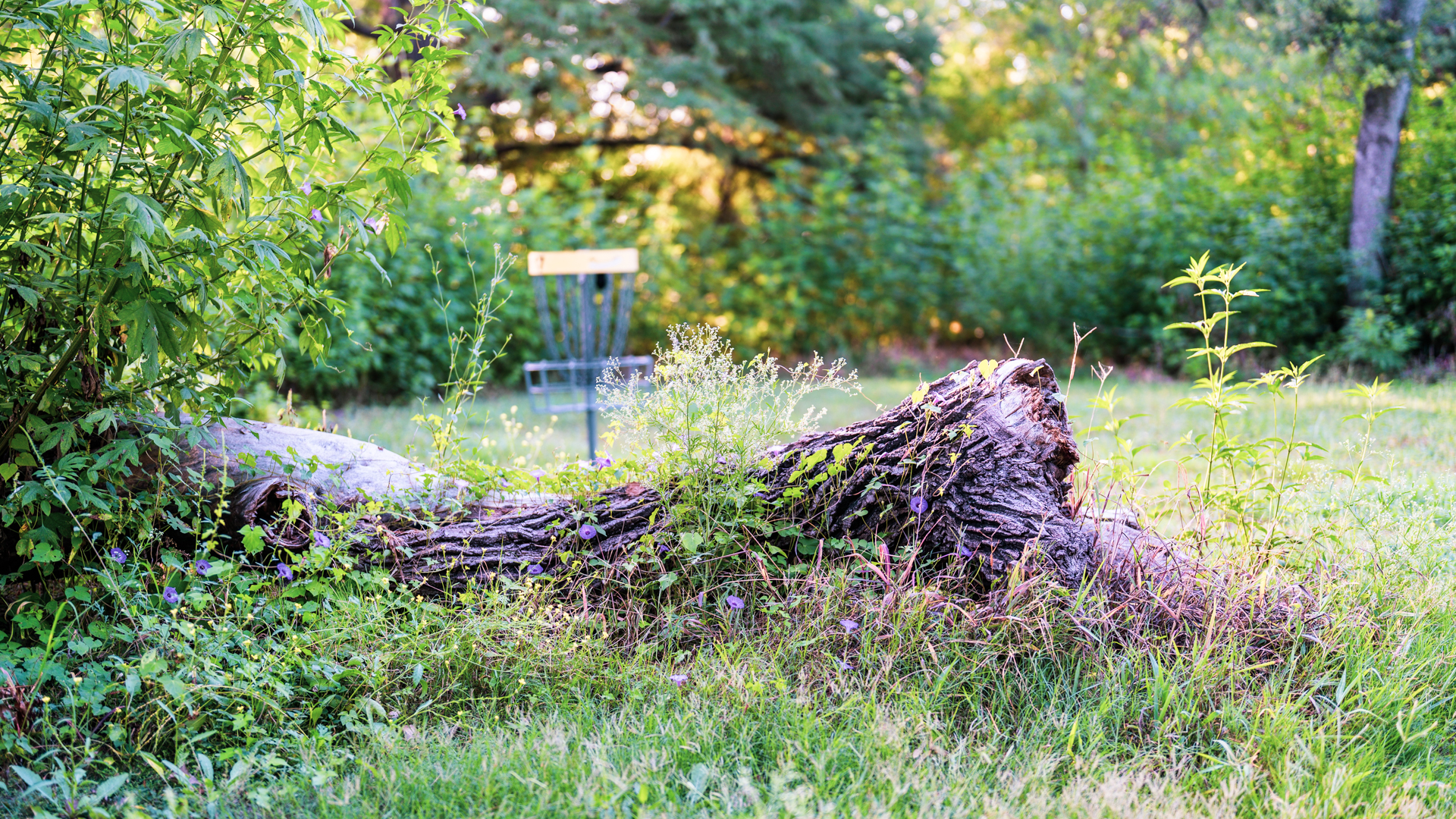
King regularly works with a team to bring native plants throughout the city. He’s created a tiered system, from one to three, for different levels of natural landscapes. The first is extremely manicured, typically occurring in populated cityscapes, such as Mary Kyle Hartson City Square Park, while tier two can be found off of trails and tier three is all natural. Throughout all tiers, King shared that the city is being thoughtful on its decisions. It works to curate areas that are attractive to the human mind, while maintaining native plants and removing invasive species by selectively removing targeted plants, rather than mowing down an entire area, allowing the natural processes to continue, without disturbance.
These new, more natural areas of the parks have been met with positivity, said the pair, as opposed to the previously mowed and flat landscapes. Davis shared that research shows that “lollipop” trees and perfect flowers don’t provide the same experience as a natural area, since the subject still feels trapped in an urban environment. By adding back organic opportunities to parks, residents are able to have a more mentally restorative experience, said Davis.
A trend titled “forest bathing” is when individuals immerse themselves in nature, which allows them to inhale natural chemicals that improve health, he continued, adding that studies have noted that blood pressure is lowered by simply looking at a tree.
“There have even been studies that have demonstrated that the more, the greater your ecosystem service quotient in a neighborhood, the lower the crime rate. It really has an impact on a community. So, when we say that we create landscapes that pay us back rather than cost, that’s what we mean,” said Davis.
In the past two years, the division has planted 162 trees and 6,671 native plants, removed 2,020 exotic plants and removed 6,490 pounds of trash, while maintaining 215,323 square feet of landscape beds, 12 miles of trails, 143 acres of land, for an estimated cost savings of $74,000 and a value of $231,000 in ecosystems services added to the community.
“This is what we mean when we say we create landscapes that pay us back rather than cost us. By altering the maintenance regime in thoughtful ways, we save money and simultaneously allow riparian forests to regenerate or provide critical meadow habitat for declining pollinators. These hard savings allow the Parks Department to reallocate recurring costs to other needs, thus making conservation park management strategies not only the healthier choice, but also the fiscally wiser one,” said Davis.
Some of these hard savings come from the reduced mowing that has occured with the changes implemented, as Davis said that it costs approximately $800 per year to mow one acre regularly. This money can then, instead, be used to invest back into native landscapes or training employees on the new approaches by the Conservation Division.
King stated that a hidden surprise was the environmental community that was awoken with these new implementations. He shared that he walks the trails and is greeted by community members that are ecstatic with the changes made and are excited to contribute to keeping the space clean with new friends made.
The community aspect is important as it offers opportunities for education. For example, King shared that many may not understand that there are negative environmental effects when bringing foreign plants to one’s yard. Instead, he suggested keeping them inside, to prevent spreading.
The importance of returning to native plants has obviously been a focus of Davis and King, but the city still has a long way to go before it reaches what the pair hopes will be an expansive, healthy park system. In order to aid this effort, the pair sacrificed their evenings and nights for weeks to create a climate-ready native plant list.
The impact of this list was tectonic, said Davis. Some may have native plant lists, said Davis, but the climate-ready aspect is what led to the city of Kyle to speak at state and national meetings, presenting their work. Prior to starting the list, they analyzed the future of the city’s climate. According to King, the city sits on the cusp of two eco-regions, the first of which is the Edwards Plateau, which consists of rocky and shallow soil, while the Blackland Prairie sits on the other side and consists of thick, clay soil that shrinks and swells.
Davis took this information and looked at the future of Central Texas and determined that in the next 50 years, the region will likely shift toward a climate similar to southern San Antonio, which is a dryer, sandy plain. From there, the two tackled a list of more than 6,000 plants to determine which will survive the change.
“We would look at that county map and that little bubble we made and we didn’t just want to find plants that were native inside that [Kyle] bubble. We wanted to make sure that they were in that [San Antonio] bubble. Yes, they’re native now, but also that they were found south or west because in 50 years, with that changing climate, they should still be able to, hopefully, make it in Kyle,” explained King.
By narrowing down the list to approximately 600 species, the city can now partake in assisted ecosystem adjustments, which Davis noted is when they take a species that they know will survive in both the current climate and the future, dryer climate and plant those here instead. This way, they are ahead of the climate changes.
Although the list has approximately 600 species, King stated that when working with developers, they provide a different list, consisting of plants that are easily accessible through local growers in the area to assist with adding native plants back into the city.
Ultimately, both King and Davis have a goal to create an environment that is healthier and better for both humans and animals, while having a space to escape the city.
Community members interested in learning more can attend a monthly education seminar on the last Thursday of each month held at 208 Republic Drive, Suite A in Kyle or partake in volunteer opportunities.
To learn more, visit www.cityofkyle.gov/living-here/parks-and-recreation/conservation.