 Ashley Kontnier
BUDA — Doctors prepared Jett Payne’s family for the possibility that he would never walk, following complications surrounding his birth. Last month, the 2-year-old ran onto a tee-ball field, with some of those same doctors cheering from the stands.
When Ryann Payne and Brad Payne met at Buck’s Backyard in Buda in 2021, they knew almost immediately that they saw a future together. Just 20 days later, they were engaged, ultimately getting married in July 2022.
Shortly after their wedding, the couple began trying to expand their family, as they didn’t want a large age gap between future children and Brad’s son. Though, months of trying and failed fertility treatments caused them to take a break.
“We kind of just gave up for a little bit and we were like, ‘Let's take a break. I'm tired of focusing on this all the time. Let's just see what happens,’” Ryann explained. “Literally, a couple weeks later, I found out I was pregnant. So, that was miracle number one with Jett.”
For all intents and purposes, the pregnancy went just as it should. Even with additional anatomy scans, due to the baby measuring large, there was no indication of the trouble that would come.
On June 8, 2024 — Brad’s birthday — Ryann went into labor. Determined to not go to the hospital too early or sit in the house, she labored through their older son’s baseball tournament all day and even hosted a party for Brad that evening.
The next morning, the couple went to Ascension Seton Hays Hospital, where Ryann was checked into the Labor and Delivery Unit at 2 centimeters dilated and with slightly elevated blood pressure.
Around 6 p.m. that day, it was time to start pushing.
“His heart rate was never unstable,” Ryann recalled. “The only thing that was a little bit off was my blood pressure was a little high. At that point, there was zero concern for anything.”
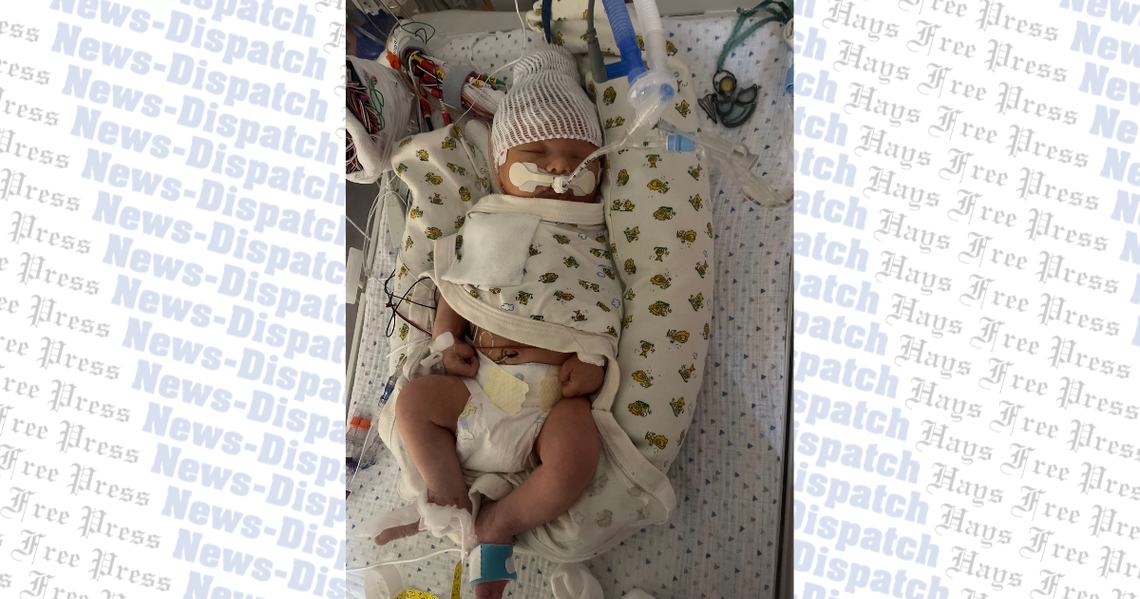
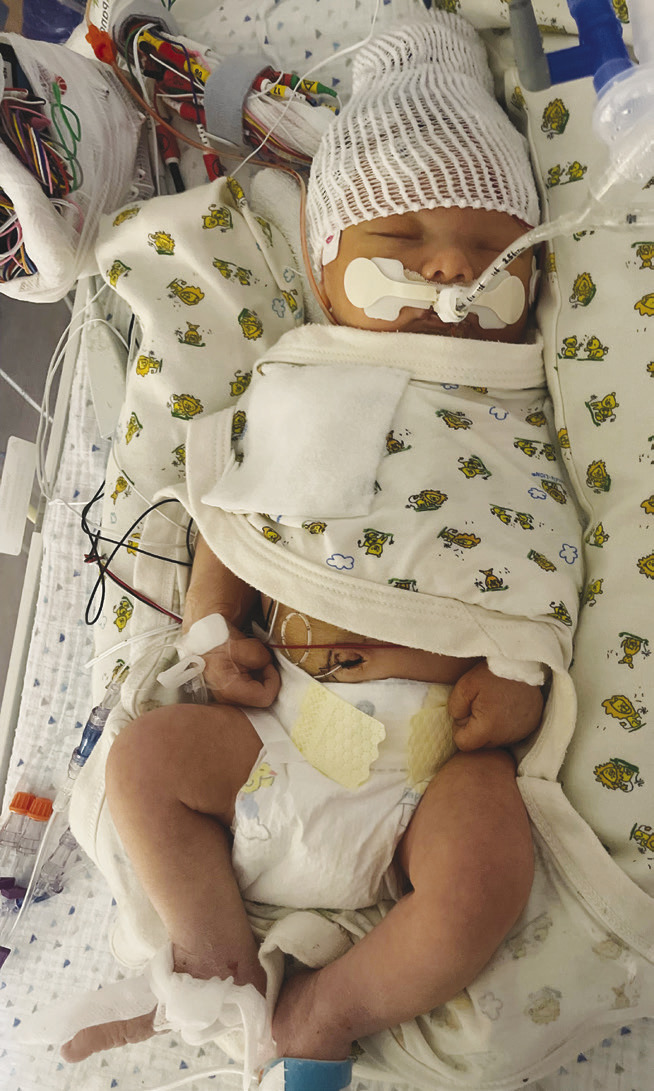
Despite three-and-a-half hours of pushing, Jett’s vitals remained stable and Ryann remembered thinking he was stubborn. But everything changed when he was born gray and motionless, not crying.
Rather than getting those first moments with her newborn, he was whisked away immediately to the neonatal intensive care unit (NICU).
Throughout the evening and through the night, doctors performed tests on Jett, who Ryann said was inconsolable, convulsing and wouldn’t eat, but none of their ideas about what could be wrong quite fit the scenario.
It was at shift change the next morning, when a new neonatologist and new nurse, Nicole Trudeau, came to review the newborn’s case with the parents, that Ryann noticed the nurse’s face.
“He started shaking again and the nurse looked over and she put her hand on Jett and she looked at the neonatologist and you could tell that she was trying to quietly say something,” the mother said. “The neonatologist looked at him, touched his arm and she was like, ‘He's having seizures. We need to call Dell [Children’s Medical Center].’”
The transport team arrived to take Jett, stopping by Ryann’s postpartum room before they left to say goodbye. Once arriving at Dell, the neonatologist on-call, Dr. Sameer Gajjar, made the decision to get an MRI immediately, prior to admitting the baby, which Ryann believes helped lead to a quicker understanding of what was happening and the eventual positive outcome of the case.
By the time she was discharged from Ascension and drove to the new hospital, Jett’s doctors had discovered the cause of all of the symptoms: he had suffered from four perinatal strokes in various locations in his brain. They warned that, in addition to potential cerebral palsy, the child would likely have significant motor function problems and may never walk.
Due to symptoms the baby was experiencing, Ascension retained Ryann’s placenta to conduct a placental study. The exam indicated that it was irritated by the extended time she was pushing during labor. As a result, the doctors believe that microscopic pieces broke off in utero, traveled through the umbilical cord and into Jett’s bloodstream and brain. However, the definitive cause is uncertain.
“I literally thought I was going to throw up on the floor,” Ryann recalled. “My very first thought was, ‘He's going to have to sit in a wheelchair on the sidelines and watch his brother [play baseball] for the rest of his life.’”
Because the electrical activity in his brain was too high — causing the seizures — he was placed on multiple medications, one of which required intubation for approximately 24-36 hours. After this, the seizures largely stopped occurring.
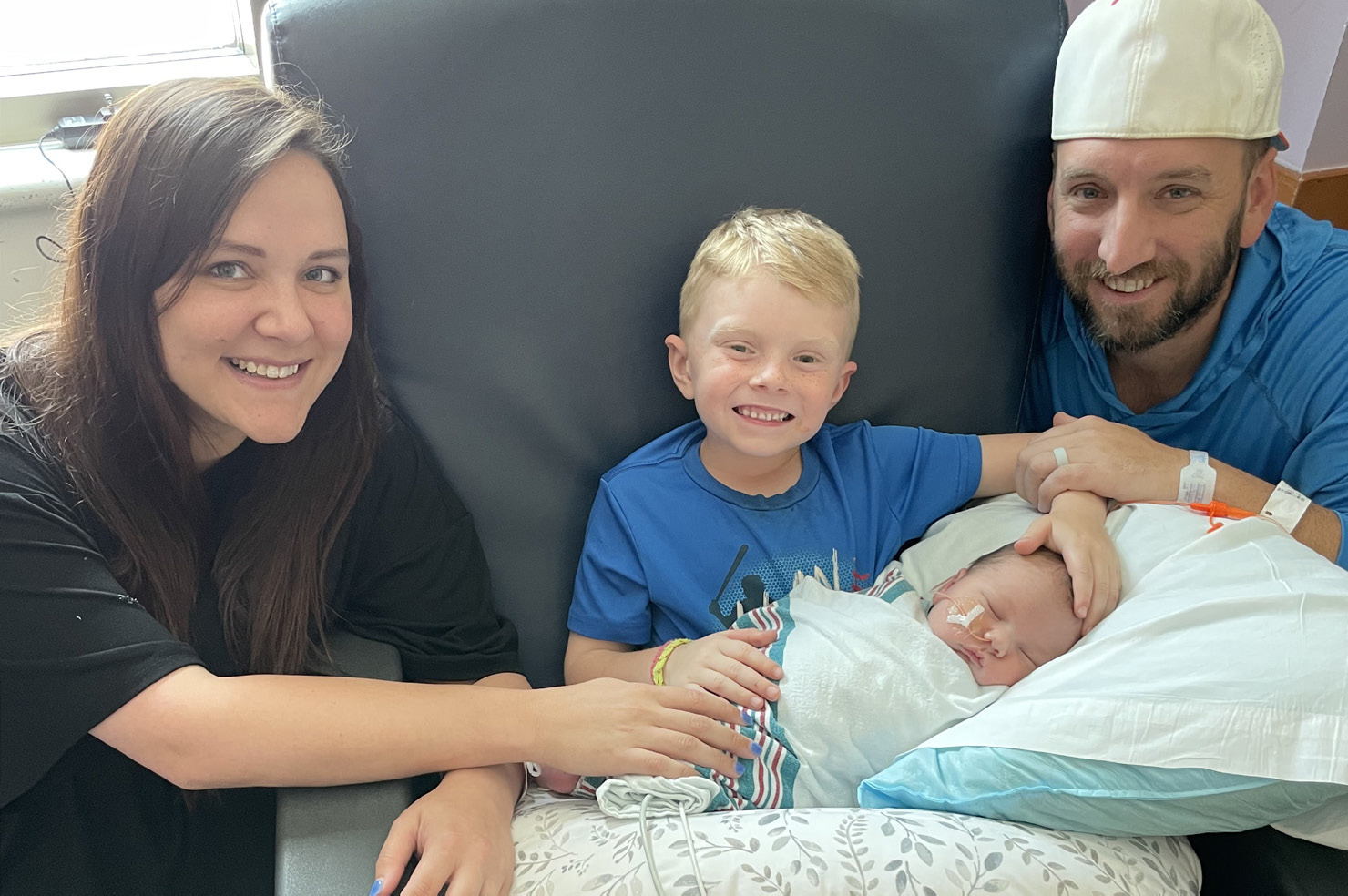
Jett stayed in the NICU for 11 days — until the electrical activity was at a stable level — and remained on two preventative seizure medications after discharge.
Neonatologist Dr. Ashley Lucke explained that it was difficult seeing the days when Jett could barely move his arms, due to exhaustion from the medication, but emphasized that, “I think the key things for me that I remember was trying to take moments where it felt like there was little hope left and assure Ryann and Brad that Dr. [Leah] Ferrante and I could see the future potential and the beauty of how adaptable a newborn baby's brain is .. I specifically sat Brad and Ryann down in the NICU and told them that we’re still hopeful of what his prognosis could be with the right amount of physical therapy, specialized medical treatment and love poured in by his parents.”
Jett was eventually weaned off of one of the medications at four months old, following a repeat EEG to check his brain. His mother shared that hearing this news was one of the first truly good days.
“Dr. Ferrante was able to get the results while we were still at the hospital, so she was able to deliver that news in person to us that his results were significantly better than she would have expected,” Ryann stated. “She said they weren't perfect, so she didn't want to wean him off of both seizure meds. But she was like, ‘I did not expect them to look as good as they do … It's obviously very early [and] four-month-old babies don't do a lot, but based on what four-month-old babies typically do, he looks to me like he's advanced.’”
After an additional EEG at eight months, Jett was taken off the remaining medication. Aside from slight concerns about the function of his left arm when he was approximately 1 year old, which resolved on their own, the now-2-year-old has no known deficits from his early complications.
“It's just, every day of his life has been apparent that something about this kid is special,” said Ryann. “Not only has he always met his milestones, he's blown us away in every category.”
For 2026, he was selected as an ambassador for the Children’s Miracle Network, which partners with hospitals across the United States to raise funds for local children’s hospitals.
Ryann explained that these events were initially difficult for her: “I broke down in our room crying after because most of the kids that are involved with Children's Miracle Network have permanent disabilities or they've gone through cancer and these little, tiny children have been through more in their few years of life than some of us will ever go through in ours. It just made me feel very guilty to be there with Jett because he truly is a miracle; he shouldn't be able to be doing the things that he's doing. We never imagined that this is what life would look like for us. It’s just so different and so much better than we could have imagined.”
She has tried to change her perspective on this, she continued, by reminding herself it’s a gift to be able to give hope to other people and provide a positive story for other parents going through the unimaginable.
The family has also done fundraisers for the Dell Children’s Neuro-NICU and other NICU families for both of his birthdays.

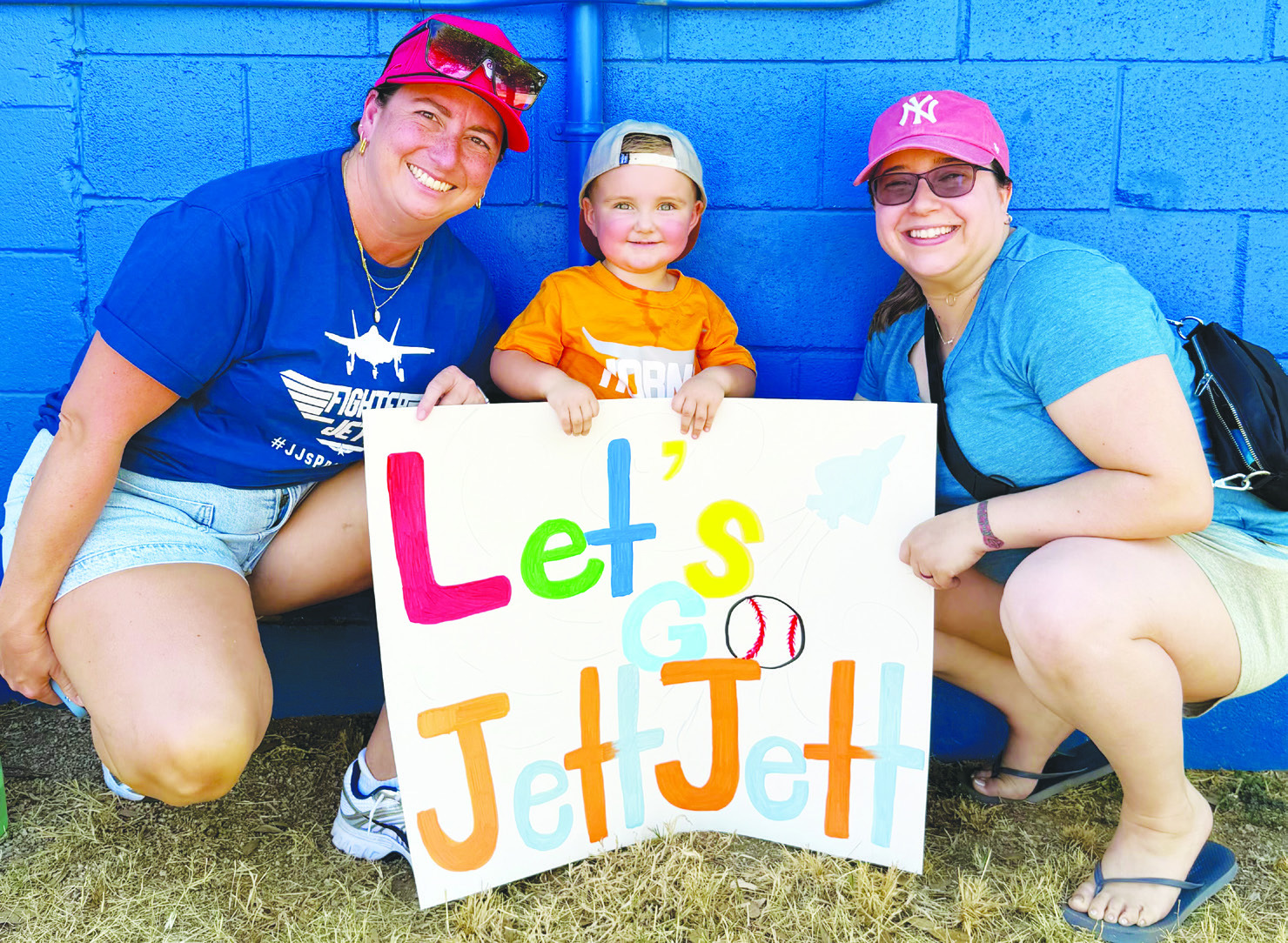
As for Jett, in a true testament to how far he’s come, he was invited to play on the 4U tee-ball team over the summer and is the youngest player on the team. His first game was Sept. 19 and Lucke and Ferrante were there to cheer him on.
“He hit the ball off the tee and ran back to the dugout instead of first base,” Ryann said, laughing.
“All of [the hard work and love] was the recipe to go from barely able to move his arms, to a home run swing on the field,” said Lucke. “I still recall the heaviness that we felt reading Jett’s MRI and we frequently go back and look at it, questioning whether our memory of the extent of his injury is correct. We question that maybe his MRI was not as severe as we remembered, but indeed, every time we go back and look at it again together, Dr. Ferrante and I are overcome with gratitude and appreciation of what a privilege and honor it is to be a part of his story. He is an extraordinary little boy who I truly believe is destined to do incredible things in this life beyond what any of us can fathom.”
Ultimately, life for Jett isn’t anything like his parents or his doctors were expecting, in the best way possible — something Ryann can only simply call a miracle.