 Brittany Kelley
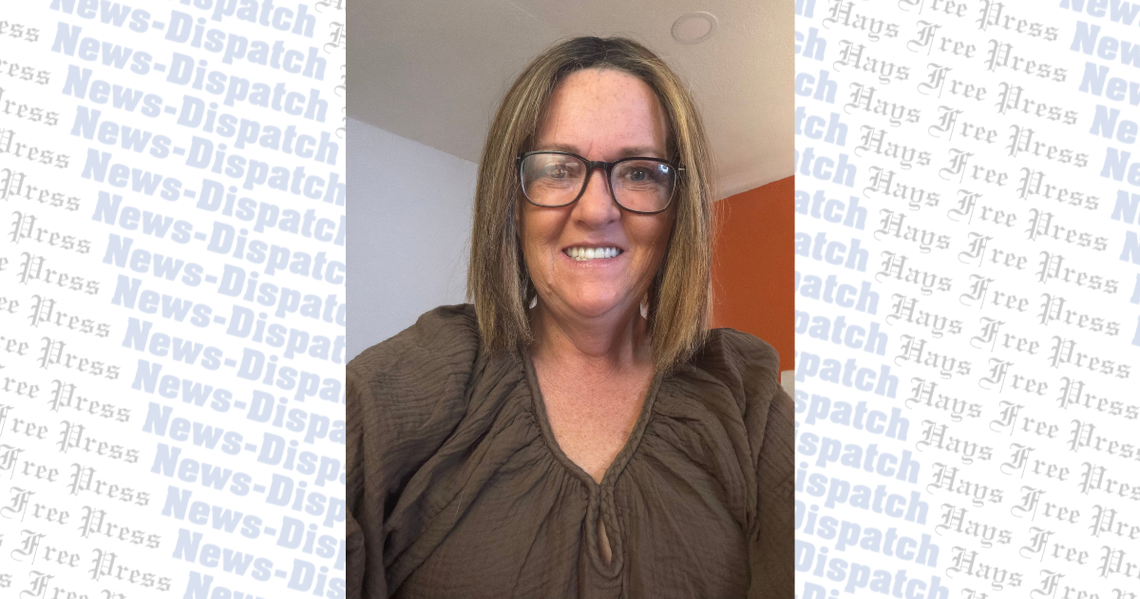
BUDA — Laurie Herald’s year hasn’t panned out the way she was expecting, but at the end of the day, she's celebrating being alive and able to recognize Breast Cancer Awareness Month nearly a year after her diagnosis.
Herald is originally from northern Kentucky, but moved to Houston 20 years ago for her then-partner’s job. There, she spent 18 years working as a director at a local childcare center up until she lost her job in February, though this was not the first of her long list of battles she has recently fought.
The mother of two was fighting a bout of sickness in fall 2025, when the required surgeries and tests led doctors to fear that cancer was present in her body.
“They thought I had uterine cancer when they did my CT scan, but luckily those [cells] came back precancerous. I have a family history of breast and uterine cancer with my mom and grandmother, so then, everybody went on high alert,” recalled Herald.
After more tests and a mammogram, she was ultimately diagnosed with Stage 1 breast cancer in December 2025, specifically what is called triple negative breast cancer.
“It’s highly aggressive [and] there’s no true treatment that targets that cancer, so they just kind of hit you with a couple different drugs and hope for the best. In my case, they luckily feel like they removed everything. They removed some lymph nodes [and] those came back negative, but the downside is that triple negative has a high reoccurrence rate within two to three years somewhere else in the body,” Herald explained.
Although currently cancer free, she stated that she has to get bloodwork done every four months to ensure that there are no changes that indicate that the cancer has returned.
Throughout the months of treatment, Herald tried her best to continue her job, though she shared it was difficult, due to her weakened immune system. She worked up until the day before she had her surgery. The business, she said, was small and family-owned, so there were no short-term or long-term disability opportunities or benefits, resulting in an abrupt end to her income.
Furthermore, her insurance, which wasn’t great, as it wasn’t through her employer, resulted in an out-of-pocket pay of $9,000. This, coupled with the loss of her job and being single, was difficult, leaving her alone and without support.
In April of this year, she relocated to San Marcos to be closer to one of her sons; however, she did her best to keep the difficulties from her children, who were both in college and out trying to live their own life. The mother “didn’t want them to worry,” though soon, her “whole life turned upside down,” making it harder to hide the challenges she was facing.
“The chemo was rough. I was hospitalized after my second treatment. You did okay the first couple of days because of all the steroids and the premeds they give you, but days three through 10, you felt like you had a massive case of the flu — no energy, couldn’t move, couldn’t do anything and then, about the time you would start feeling better, you would get another treatment,” she shared.
Herald’s been unemployed and living out of motel rooms and shelters, when available, as she tries to get back on her feet.
In the last eight months, she’s lost valuable memories, such as her son’s scrapbooks and photos, possessions of her parents — now only possessing what can fit in her car.
The diagnosis not only affected her, but also her boys, Herald said, as she can also no longer support them the way she was once able to.
The mother noted that before, she helped with tuition and sent money weekly for food, but now, she simply hopes to have enough for a motel room. To mend this, one son has taken up a job working nights, but this has made his schooling more challenged, she shared.
“It just makes you feel like a horrible [mother]. I’ve told them, ‘I’m sorry that this has happened’ and that I can’t be there for them, that they deserve a lot more and they shouldn’t have to be stressed out in college and they should just be able to focus on getting their degrees. I wish it could be different. I wish things had turned out differently,” said Herald. “My life this summer was: I would do Amazon Flex, then I’d have enough money, hopefully, to get a motel room and food and gas and literally repeat. I’ve been doing that since the end of June and there’s no way to get ahead because it’s like Groundhog Day. I’m reliving the same day over and over and over again,” she said.
Still, she’s doing her best to show up where she can, regularly visiting with them and creating memories. She often joins her Texas State University son’s visits to the grocery store and recently traveled to visit her other son at Texas A&M University and meet his friends.
“I’m still going and praying and I believe it’s going to work out. I’m just trying to be patient, but it’s just, I fought so hard just to beat it and I know how lucky I am. I would watch those people that were taking chemo that have been coming for a year and I always wonder, ‘Why me? Why did I get so lucky?’ And I was thankful. I pray for all of them every day because I know some of them don’t have the chance like I did, but you fight so hard and then, all of a sudden you’re just [constantly] fighting. You finish one battle and now, you’re fighting for survival,” Herald expressed.
Organizations, such as Community Action of Central Texas have been crucial to her journey, as they not only helped with some of the payment for her surgery in February, but also with her car payment.
Herald’s story isn’t unique. According to American Cancer Society, a 2021 survey revealed that: 75% of cancer patients and survivors reported missing work, due to cancer care and treatment; 69% have missed more than four weeks of work; 39% have missed more than three months of work; 33% who missed work did not receive any income; and 13% lost or quit their jobs, due to treatment. These numbers are part of the reason she chose to share her story, not only to educate others on the reality of fighting cancer during Breast Cancer Awareness Month, but to advocate for the organizations that do so much to aid them.
“Those groups really do help and they really do make a difference,” she said. “When I’m having a bad day, I just remember how lucky I am and that it could have been a lot worse … I’m just very blessed and I’m just praying every day that whatever my next path will be, it’ll be presented in front of me soon and I can move on.”