 Lance Winter
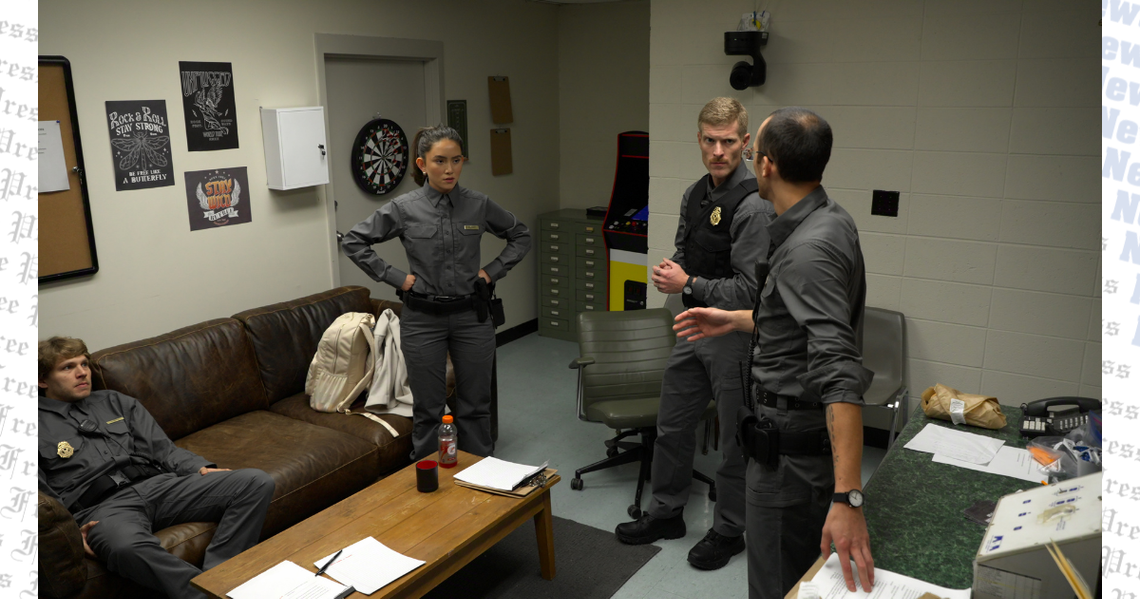
BUDA — Kiana Gaona Guerrero remembered apologizing as she fastened the handcuffs. Taking part in a riot drill for Netflix’s “The New Stanford Prison Experiment,” the Buda resident had to put on protective gear, enter a cell pod and help order participants portraying inmates to the ground.
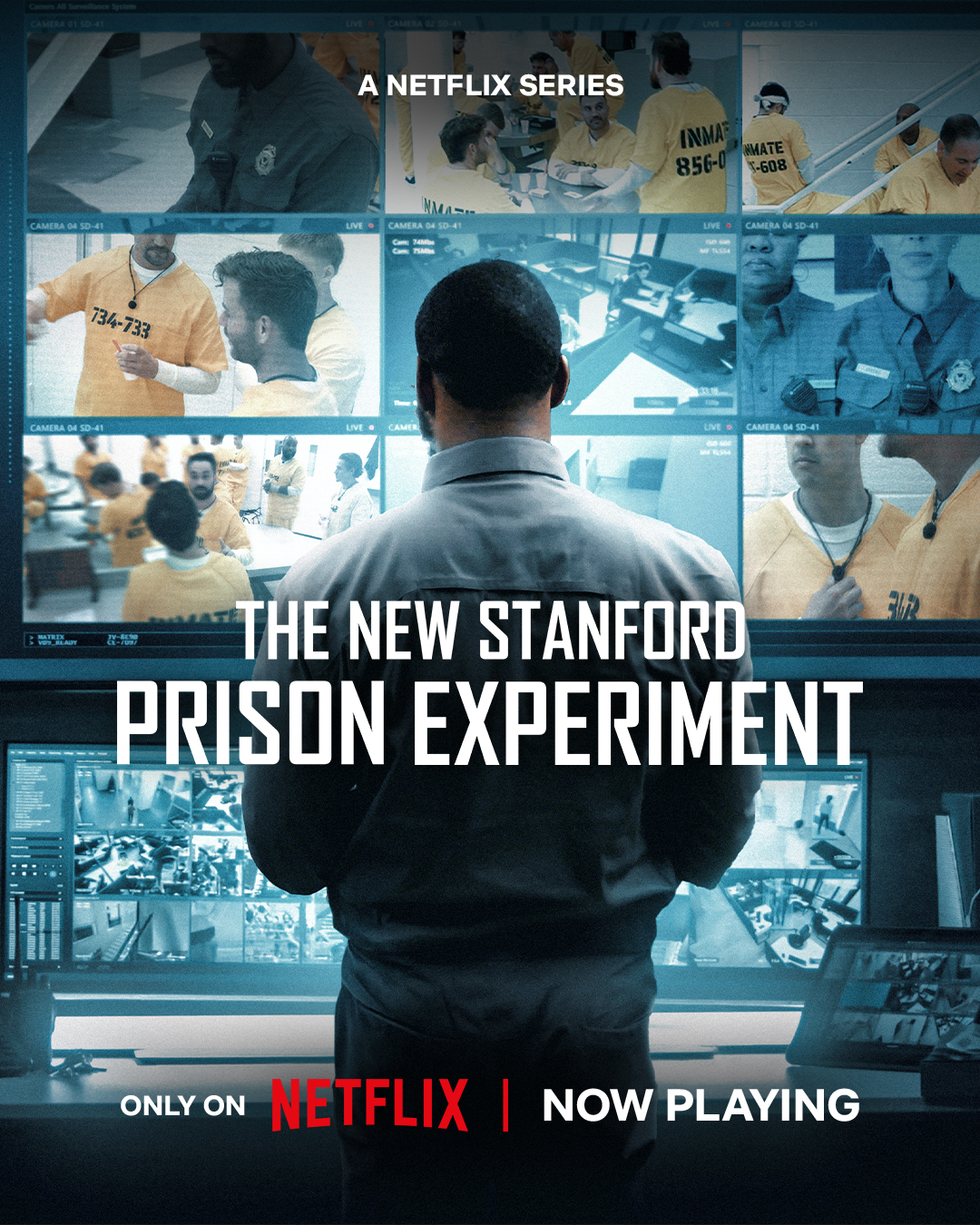
Guerrero, a content creator and social media professional, participated in the six-episode unscripted series, which premiered Oct. 21 on Netflix. The program places volunteers in prisoner and guard roles to explore how people respond to power, authority and pressure, recreating the controversial 1971 experiment conducted by Stanford University professor Philip Zimbardo. The goal, according to SU, was to determine whether giving humans power — in this case, college students, who were randomly assigned to be either a prisoner or guard — affects the way they treat others.
For someone who describes herself as neither loud nor commanding, the assignment tested more than her ability to assert authority.
“It broke my heart,” Guerrero said. “I can remember apologizing to each inmate as I was handcuffing them. That was probably the most uncomfortable I had ever been in my life.”
The experience left the content creator thinking about what it means to lead and whether compassion could be a strength in an environment built around control.
For Guerrero, accepting a place in that environment meant stepping far beyond the life she and her husband have built in Buda since moving there in 2023.
They see the community as a place to raise a family. Away from social media, she said, her life centers on her Christian faith, church and a love of coffee, with Summer Moon and The Meridian among her favorite stops.
The opportunity to participate in the series came to her unexpectedly. Guerrero said she was approached rather than applying and the unfamiliar challenge helped persuade her to accept.
“I’m not loud or commanding by nature, so saying yes to an unknown and intimidating environment was a huge step of faith,” she said.
Once there, uncertainty gave way to fear. She wondered what she had agreed to do and how she would earn the respect of those assigned to be inmates.
“I was terrified,” she recalled.
What surprised her, however, was the kindness she encountered.
Alongside the demands and discomfort of the experience, Guerrero remembers conversations about life and religion, shared laughter and connections she said viewers might not fully see on screen.
Those moments offered a different perspective on people she initially worried would be difficult to reach. But the riot drill brought the demands of her role into sharp focus.
Wearing shields, helmets and protective pads, Guerrero and others had to assert control, order the inmates to the ground and handcuff them. Her instinct to apologize accompanied each pair of handcuffs.
The discomfort also extended to the cameras.
Although creating content is part of her work, Guerrero said filming the series felt very different from deciding what to record and share herself. More than 60 cameras watched the participants, she said, leaving her intensely aware of her words and actions.
“When I film my own content, I can control the narrative, but when you can’t, it’s pretty daunting,” she said.
She found herself reconsidering what she wanted to say and overthinking what she had already done. That awareness followed her after she left.
“Exiting the experiment, I remember still subconsciously thinking there were cameras watching my every move,” she said.
It took a few days for that feeling to fade, though other impressions lasted longer.
Without phones and social media competing for attention, Guerrero said, relationships developed with a speed and depth that surprised her. The experience prompted her to reconsider how she spends her time and how much attention she gives the people around her.
It also brought a clearer understanding of her own temperament. She could carry responsibility without trying to become the loudest person in the room.
“Something I took away about myself is that I am so much more confident running in my lane,” she said.
As people in Buda and Kyle watch the series, Guerrero hopes they recognize both her concern for others and the pressure participants faced.
She also hopes they see value in a quieter approach to leadership — one that leaves room for kindness, even when circumstances demand authority.
“Leadership and authority doesn’t always look loud,” she said. “It doesn’t always command a room, but sometimes it’s gentle, compassionate and observant.”
Community members can watch Guerrero in “The New Stanford Prison Experiment” on Netflix.