 Brittany Kelley

HAYS COUNTY — As the weather warms up from the cold months of winter, a multitude of animals begin to wake up from their slumber, including snakes. But the truth is, explained Snakes of Hays County owner Brent Ormand, there is no true season where snakes are not active. So, it’s imperative to practice snake safety year-round.
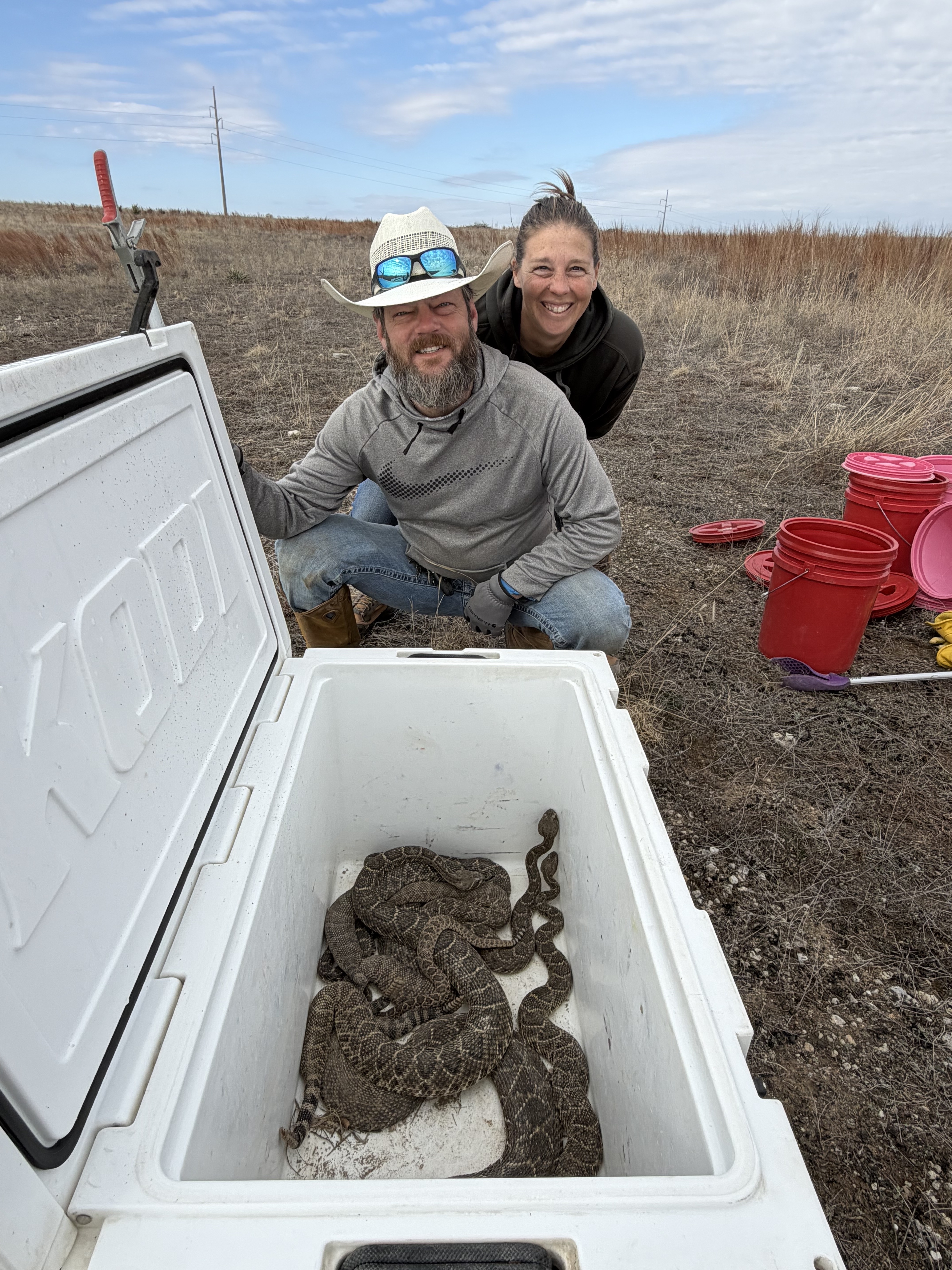
Snakes participate in brumation, which is the “reptilian form of the mammalian hibernation,” said Ormand. “The difference between brumation and hibernation is that snakes can go into brumation and come out of brumation as often as the weather allows it … Even during the dead of winter, if it’s warm enough outside, snakes can be active.”
He added that for the past eight years, he’s caught a rattlesnake within a week of the Christmas holiday. Because of this, he emphasized that it’s important for community members to educate themselves, whether through classes offered by Snakes of Hays County — where Ormand will bring several live snakes to view and study — or learning proper tactics to stay safe.
For example, he noted that snake identification is difficult, unless professionally educated, as there are several physical characteristics to distinguish them. Despite this, the easy tricks many learn as children are not always the answer. This includes the common rhyme, “Red and yellow, kill a fellow. Red and black, friend to Jack.”
“Texas coral snakes are known to have aberrant patterns, specifically here in Central Texas. So, there are coral snakes that will not always follow that rhyme,” he stated. “If you’re using a nursery rhyme to determine whether a snake is venomous or not, then you need to not be messing with the snake.”
Some of the venomous snakes in Texas include the coral snakes Ormand mentioned — which are rarely seen, due to residing underground — western diamondback rattlesnakes, cottonmouths or water moccasins and copperheads.
Cottonmouths are less common in Hays County than residents realize, he said. Ormand described getting calls from individuals that believe that their ponds are infested with them, but this breed of snake prefers slow moving water. So, they are more likely to be found in streams and rivers, such as the San Marcos River, Blanco River and Onion Creek.
The same goes for copperheads, Ormand said, explaining that heading in any direction away from Hays County will yield more of them than they would within county lines, unlike the western diamondback rattlesnake, which can be commonly found.
Snakes are defensive reptiles, spending their time hiding from predators and are always on the move to look for sustenance. So, keeping lawns mowed low, free of debris and the bases of flower beds clean, leaves little desire for snakes to hide there. Ormand noted that, “If you can’t see them, then they will feel safe there.”
With this knowledge, some may ask how they can enjoy the spring weather and participate in activities, such as hikes or playing fetch with their dog, while being safe.
“It’s very important for everyone to get out and enjoy nature and the best thing to do is just be aware of your surroundings. One good piece of advice is: if you see a log, don’t step over the log and put your foot where you can’t see, same thing goes with a rock or a boulder,” remarked Ormand. “It’s best to either step on the log and then, take a step off of it or go completely around the log.”
Furthermore, he stated that conducting a search around the area to ensure that there’s no snakes before tossing a ball for a pet is also smart to protect them. Pet owners can also sign their dog up for a snake safety course co-conducted by Ormand and his team. The canines learn the scents of live snakes, including the aforementioned venomous ones in the county, alongside a negative association. This would then discourage their interactions in the wild.
In the case that someone stumbles across a snake or steps on one, he stressed to “calmly, but quickly move away.” These slow movements would hopefully discourage any reaction from the reptile. He specified that a snake is never going to attack someone unprovoked, unless they feel threatened; this is how the majority of venomous bites occur.
“Snakes are just trying to survive like the rest of the wildlife we have in the area. They do not desire to envenomate anybody. Every time they use venom, it takes resources from their body to reproduce that venom,” expounded the expert. “A snake using its venom for anything other than acquisition of food is a good way for that snake to not advance physically. Ultimately, a snake’s job is to eat, drink, mate and not die. They want to do anything they can to get bigger, to have a better chance of mating.”
Snakes engaged in a tactic called male combat, Ormand continued, where they wrap around each other to pin the other down in the presence of a female. The bigger snake almost always wins and they can’t get larger by constantly envenomating, as it would make it less likely to mate.
The method of leaving a snake alone is not always an option if it’s on residential property, as people may not want it in their yard with children and pets. In this instance, Ormand suggested lightly running water over the reptile.
He noted that, “Snakes can associate negative interactions with a location. So, if you were to spray a snake a few times, the chances are that it’s going to know, ‘Hey, I probably shouldn’t go back there because every time I do, I get harassed.’”
Although an individual may be educated and practicing safety tactics, a bite could still potentially occur. If biten, it’s important to seek medical attention, he stressed.
To learn about snake education classes and dog safety training or to reach out for snake removal, community members can call Snakes of Hays County at 512-296-7474.
“I feel 100% of every occupant of Hays County should know about snakes. It’s something that does not take a lot of energy or time to learn about and once you’re able to identify them, that knowledge will stick with you for the rest of your life,” concluded Ormand.