 Brittany Kelley
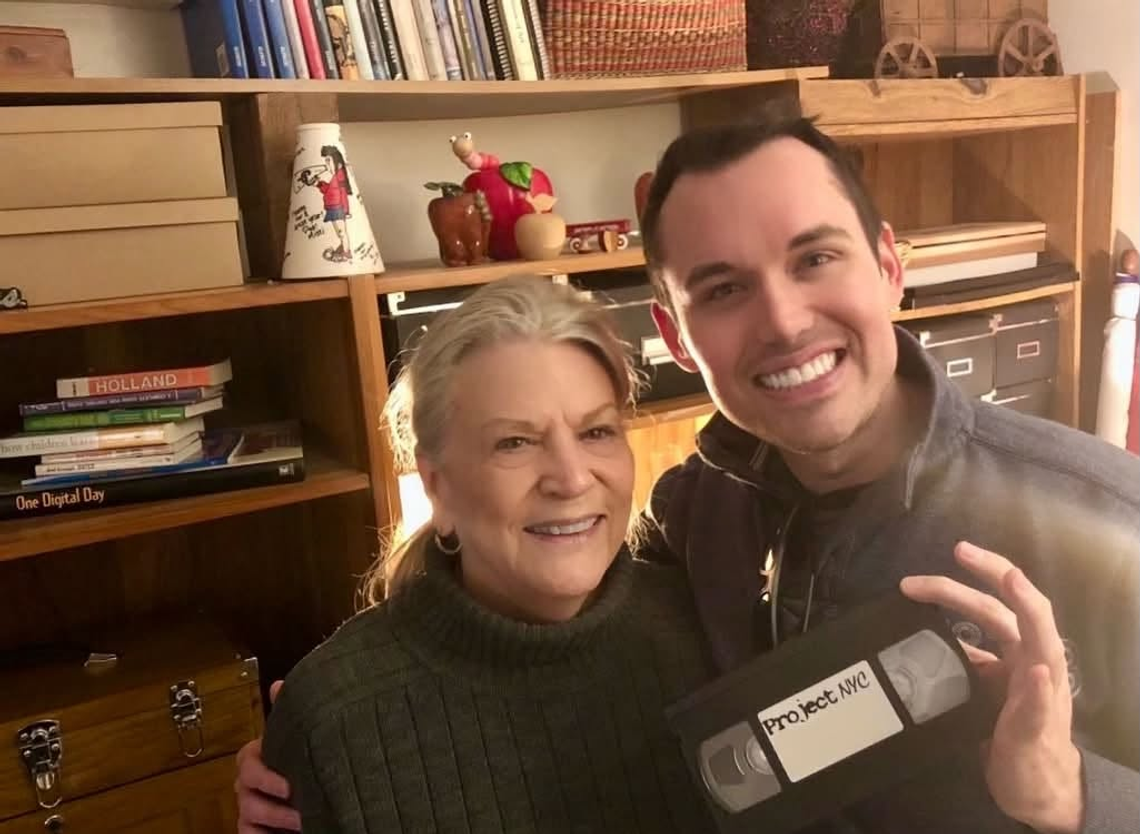
LOS ANGELES — Nearly 25 years ago, Hays County resident Joseph Fenity, armed with a legal pad and rented video equipment, flew to New York to highlight the unheard and unsung voices of those that experienced 9/11 first hand. But along the way, he found his own, too.
Fenity is an independent journalist, living in Los Angeles, Calif., with what many would classify as a successful career, but when recalling the moments that led him here, he zeroes in on the tragedy of 9/11.
He had always been interested in communications, Fenity said, whether that be through the walkie-talkies he played with or the opportunity to say the Pledge of Allegiance on the intercom at Kyle Elementary School. So, at 15, when he interned at the KLBJ Radio in North Austin, he was secure in his future career path. It was exciting, he said, to work in different departments at the business and learn how to interact with adults and behave in the newsroom.
These skills would be applied not only in his future career, but when a question popped into his head a week after the twin towers fell in New York, the Pentagon was hit and United Flight 93 crashed into a field: Where were the kids?
“When I wasn’t at school, I was at home watching the news,” said Fenity. “I’ve always been sensitive to people who are left out or people who are ignored … I saw this blind spot in the media’s coverage and I don’t know why it took a kid from Texas to see that. Maybe that’s just it — it took a kid to see it. But I thought, ‘If I’m so bothered 1,500-plus miles — two timezones — away, if I’m so bothered down in Buda, Texas, what about those kids who are three blocks away?'”
As a teenager, he only saw the adults. It was an adult news anchor talking to an adult attorney or an adult city official talking to an adult airline representative. He wanted to know about people his age.
He recalled struggling as a child, whether it be with a speech impediment or being the last in his class to tie his shoes. Fenity knew what it was like to feel overlooked, so when he saw that there was a lack of coverage on their experience, he felt called to remedy the issue.
“I got it in my head. And I’m a very persistent and occasionally ambitious person and when I make up my mind, the good news and the bad news of it is, I make up my mind,” he said.
What was made up? The decision that he, a 16-year-old from Hays County, needed to be the one to find the answer — by flying to New York City, N.Y.
So, he brought this up to his Academy at Hays, now known as Live Oak Academy, teacher Vicki Jurica. Fenity said that she didn’t criticize him, didn’t tell him that his plans were over the top or flat out crazy, instead, she responded with, “Give me a pitch.”
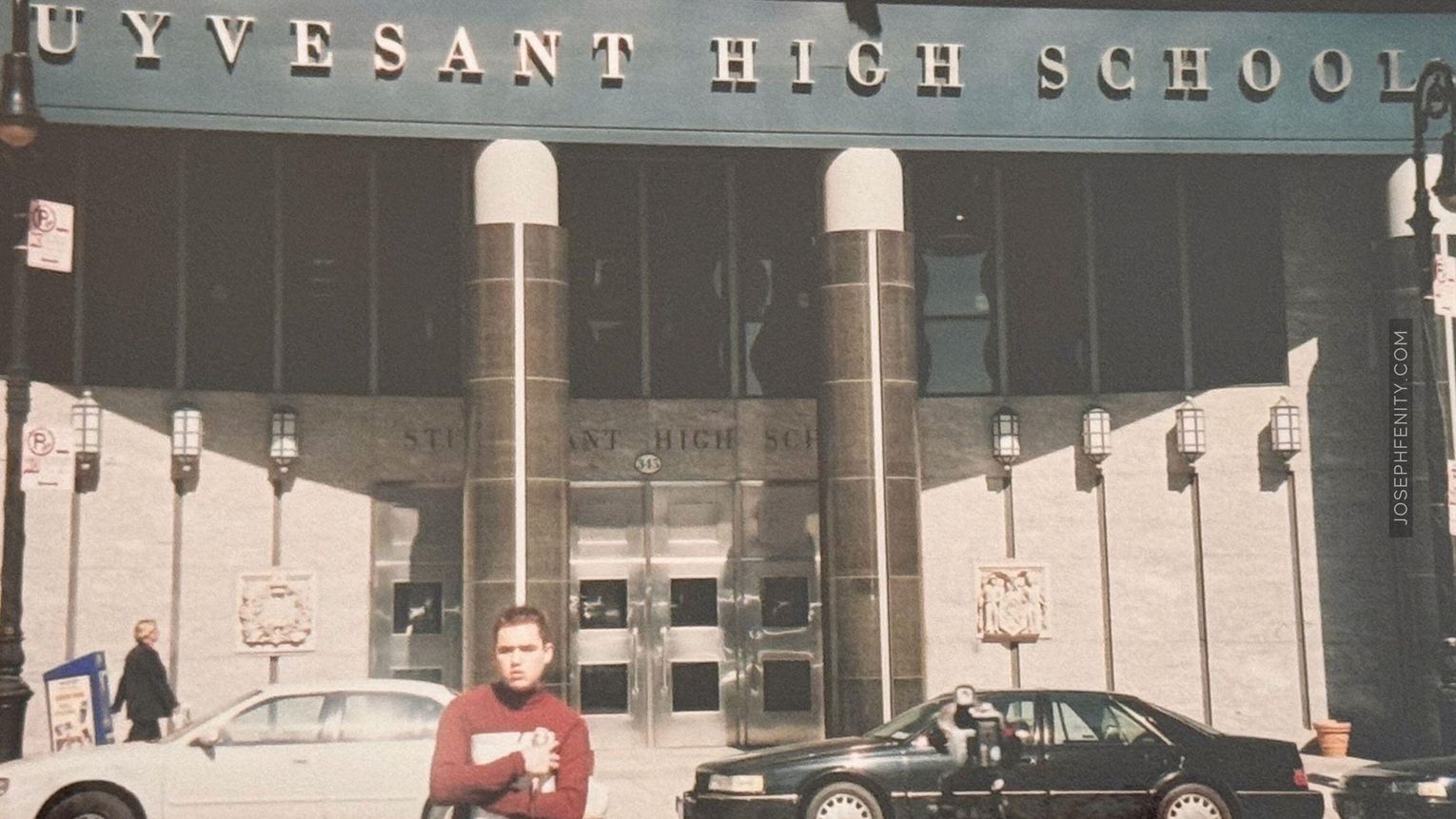
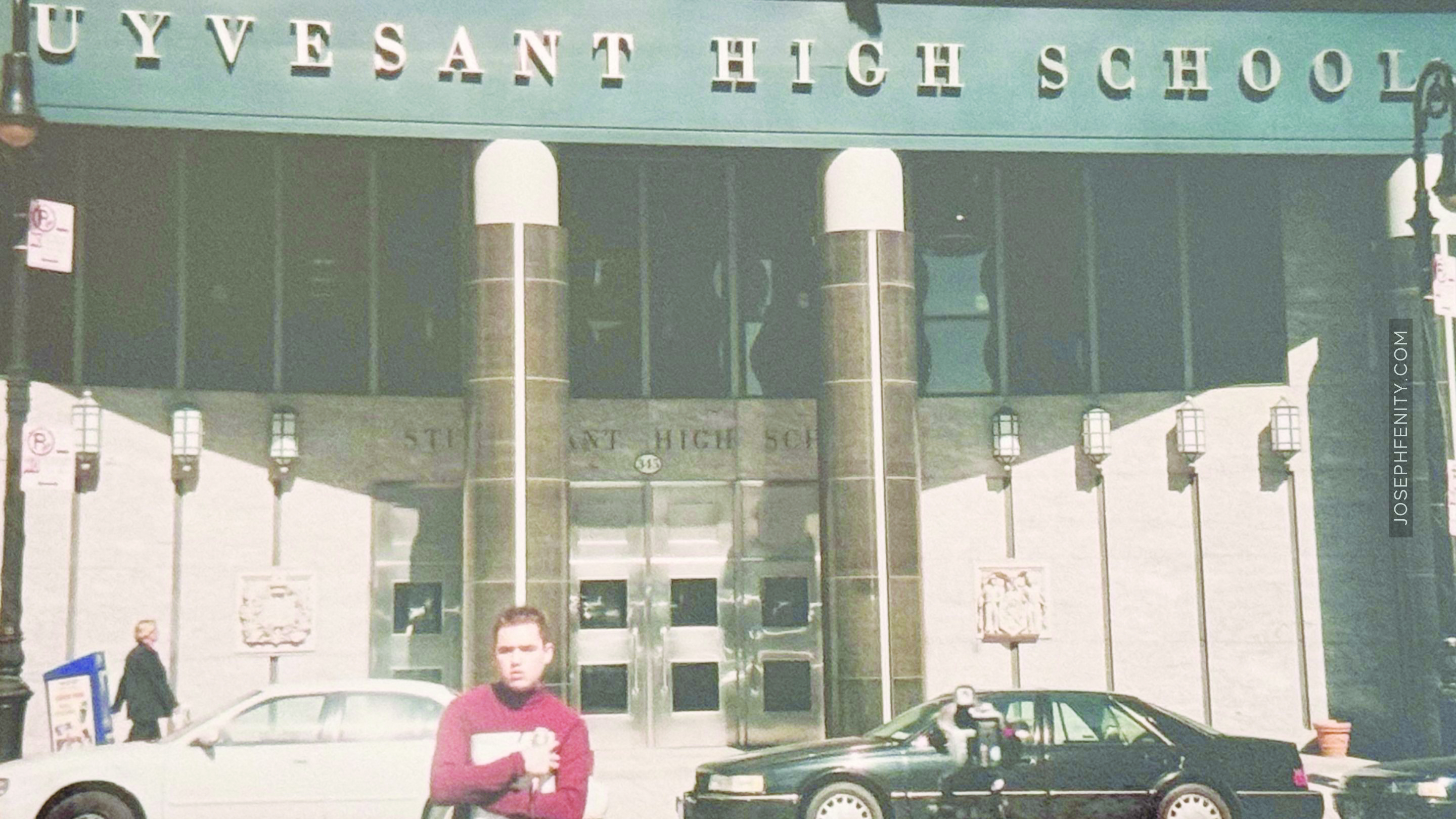
Using the skills garnered at his internship, he researched the closest school to Ground Zero — Stuyvesant High School — and reached out to several people there, ultimately reaching the assistant principal, where he relayed his objective and the plan started to come together.
“Essentially, we got approval to go into Stuyvesant High School and get exactly what I’d been looking for since 9/11 and that was firsthand accounts of young people, the future of America, the youth of America,” said Fenity.
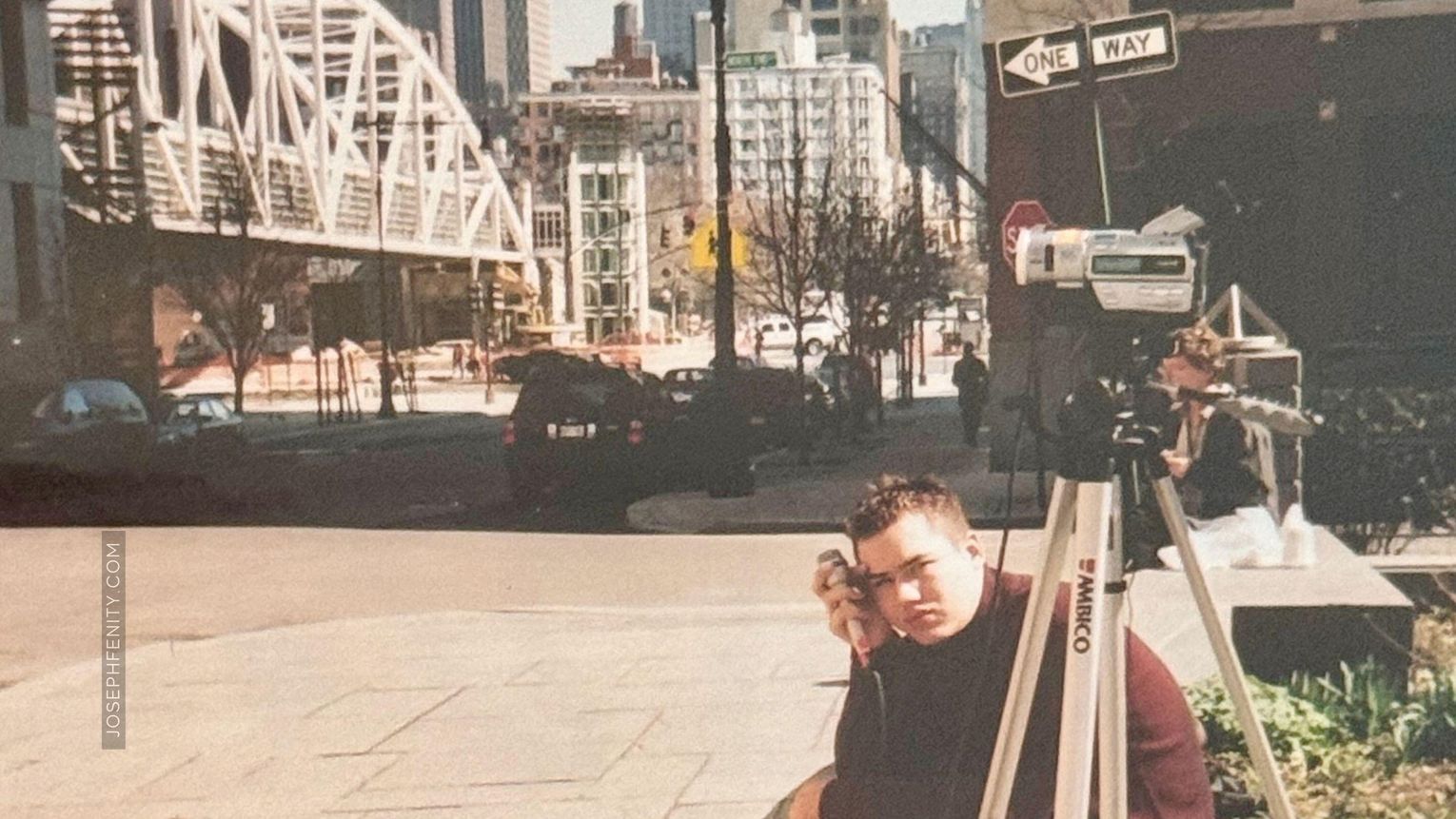
The details of the discussion, which took six months to come to fruition, were not always privy to Fenity at his young age, though he did note that Jurica had written a grant to receive funds for editing equipment from the school. However, the trip, he said, from the flights to the hotel rooms, was entirely funded by his family. He remembered that, to convince his father, his first journalistic adventure had to encompass his sisters and mother, all of whom became his camerawomen.
“I took my tripod from Live Oak Academy and the camcorder and a rented microphone — a really, nice, fancy, I’m-afraid-I’m-going-to-break-it-microphone — and I headed off to New York City with a legal pad and my two sisters and my mom,” said Fenity, adding that Jurica assured him through a multitude of lists of his goals and focal points.
Also among his suitcase was a binder filled with hundreds of questions from classmates, to which he simply asked: “If you had the opportunity to ask students near the World Trade Center anything, what would it be?”
At Stuyvesant High School, he set up his interview station inside an empty classroom and sought to select approximately 10 individuals to speak to.
“Nobody cried and at the same time, nobody was excited to talk to me,” he recalled. “Stuyvesant had been such a spotlight of the media since the early days of 9/11 and so, by the time I got there, the media had really started doing what I had already started researching. The question I had early on in Buda, Texas, was a question that New York editors were finally asking themselves.”
Still, he pursued his goal and recorded the horrors of what the students had witnessed and experienced. He shared that they recounted the event of being dismissed early from school, without transportation, leading to many wandering the streets of New York alone. Additionally, they saw victims of the attack being wheeled into their school, which was being used as a makeshift hospital.
“They told me these stories of how unbelievable it was. They told me the stories of how once they looked out their window, what we saw looking at a [television] in Kyle, Texas, they saw out their window,” recounted Fenity. “What stood out to me was this: the bravery [and] the resilience of a young person. As time goes by, as our clock ticks, I think we all just get a little less resilient, [but] there is something about being young. You are so resilient … These kids are brave and strong and they’re united. That’s the other thing about America at the time and the vibe of New York City six months after 9/11: Everyone had each other’s back. There was patriotism. You couldn’t turn a corner in New York City and not see an American flag."
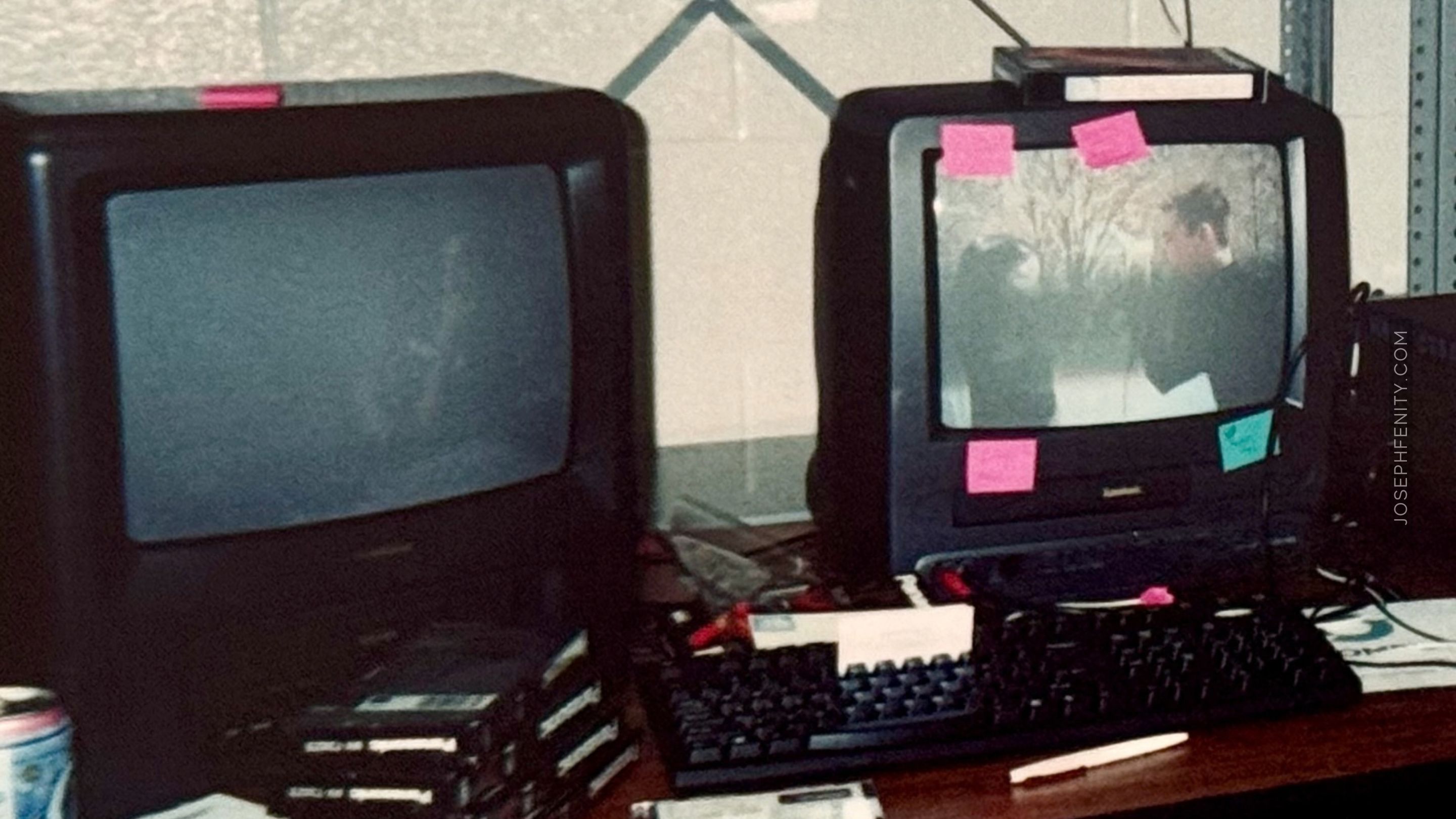
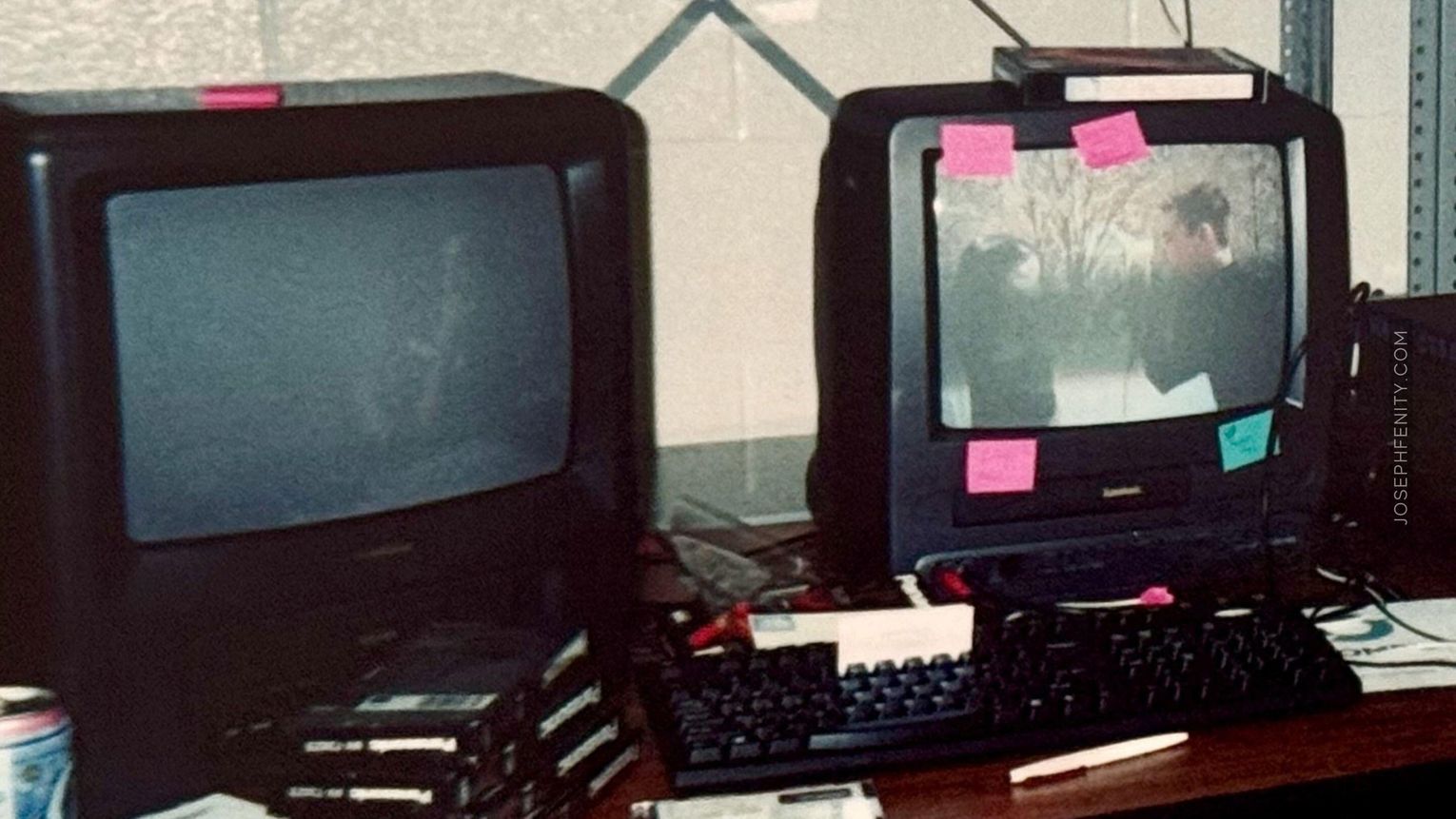
After his trip, he returned home, edited the footage down to less than 15 minutes and featured the short film documentary, dubbed Project NYC, around town.
The response from Hays CISD was overwhelmingly positive, he said, adding that, “They were so happy to see that one of their own had contributed to a national story.”
The support was great, Fenity shared, but the confidence that he gained was monumental. He didn’t care whether or not he received a good grade on the project because he knew that he had held a dialogue with these students and given them a voice.
“There was a lot of resistance along the way, with bits and pieces of this, but at the end of the day, I was a kid doing business as a reporter. I was a student doing business as a journalist and I took it seriously,” he emphasized. “Because the school district was so supportive and because the staff of Live Oak Academy was so supportive and because my parents were so supportive, I finished that project not only feeling like I had contributed to having something positive come out of a really horrific day in U.S. history, I, at the same time, had grown up a little bit in those six months.”
He continued, adding that, “[Then], in 2002, I had absolutely no reason to believe that I couldn’t do whatever it is that I wanted to do, that I couldn’t chase after any story, that I could not get anyone to sit down with me for an interview and I, still to this day, feel that way. I think that the reason I have the optimism that I can get any story and get anyone’s number and stick a microphone in front of anyone’s face is because Hays CISD told me I could.”
Those at Live Oak were instrumental to his success. He shared that Lisa Goodnow, who was the principal at the time, did her best to change the outlook on the school by labeling it as a school of choice, instead of an alternative school, and employing “outside the box thinkers,” that made it their goal to do all they could to ensure a student's success. What Fenity needed was the belief in his wild ideas.
Project NYC came and went, but this mentality carried into Fenity’s adult life, where he has continued in the field of journalism and brought the confidence grown down in Hays County with him to both the east and west coasts.
Years later, Fenity was cleaning out a storage closet back in Hays County, when he discovered several treasures, including a journal documenting his time in New York, notes, pictures and then, the tapes themselves.
He found a company to digitize the VHS tapes and, upon listening to them, was transported back.
“I was just as inspired and touched by hearing these Stuyvesant student voices that I hadn't heard in 20 years and some that I had forgotten as in, they literally did not make the documentary’s final cut,” said Fenity.
In an effort to once more share their voices, he sent out the audio recordings to former teachers, friends and family.
The choice to only include the audio was intentional, as there is a vast amount of 9/11 footage and “what’s even more powerful all these years later is their words,” the journalist said.
Fenity began looking into the Library of Congress because he wanted these students’ voices to be preserved and after connecting with staff, the home of the tapes — consisting of additional recordings and titled The Stuyvesant Tapes — is now the American Folklife Center. The center’s focus is to preserve and present folklife in all its diversity, according to its website, while creating public programs and exchanging knowledge and expertise.
Having his work preserved by the Library of Congress feels bittersweet, described Fenity.
When thinking of the project, he sees the students that were initially unheard, now remaining in history for years to come — their bravery and resilience documented.
He also sees a little boy who didn’t know how he would survive Kyle, let alone the world, but somehow did.
“I still remember the front desk receptionist at Live Oak saying, ‘You can’t call that 212-number. That’s a New York area code,’” said Fenity. “Now, I walk into newsrooms and approach stories as the most confident person in the world … The only reason I have any of that, I really think goes back to the root of that era of my life at Live Oak and in Kyle and Buda.”
To learn more or listen to the tapes, visit www.josephfenity.com.